
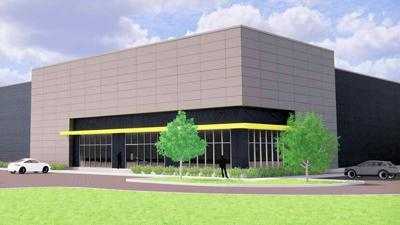

An application to build this 76,000-square-foot warehouse in Mount Laurel near Union Mill Road and Walton Avenue was unanimously denied on November 10, 2021 by the Township Planning Board. "I have major traffic concerns with the application," said board member and Township Manager Meredith Tomczyk, who made the motion to deny the application.
A state report released last week provides guidance for ill-prepared New Jersey municipalities to deal with developer requests to build warehouses in their communities.
The state Planning Commission draft report notes that the state's centralized location in the Northeast makes it a prime spot for warehouses and distribution and fulfillment centers.
Local zoning and planning boards, including many in South Jersey, have been deluged with applications from developers who want to build warehouses.
But approving a warehouse, which adds to the tax base, also can come at a cost, the report says.
Several warehouse projects have gone before Township boards in the 70and73 area. Cherry Hill in March approved a 162,150-square-foot warehouse with 37 loading docks on Woodcrest Road. Last August, Medford approved a 21,000-square-foot warehouse on Fostertown and Reeves Station Road.
At times, warehouse plans are rejected after residents complain. Last November, the Mount Laurel Planning Board, concerned about truck traffic, unanimously rejected a proposal for a 76,000-square-foot warehouse near Union Mill Road and Walton Avenue.
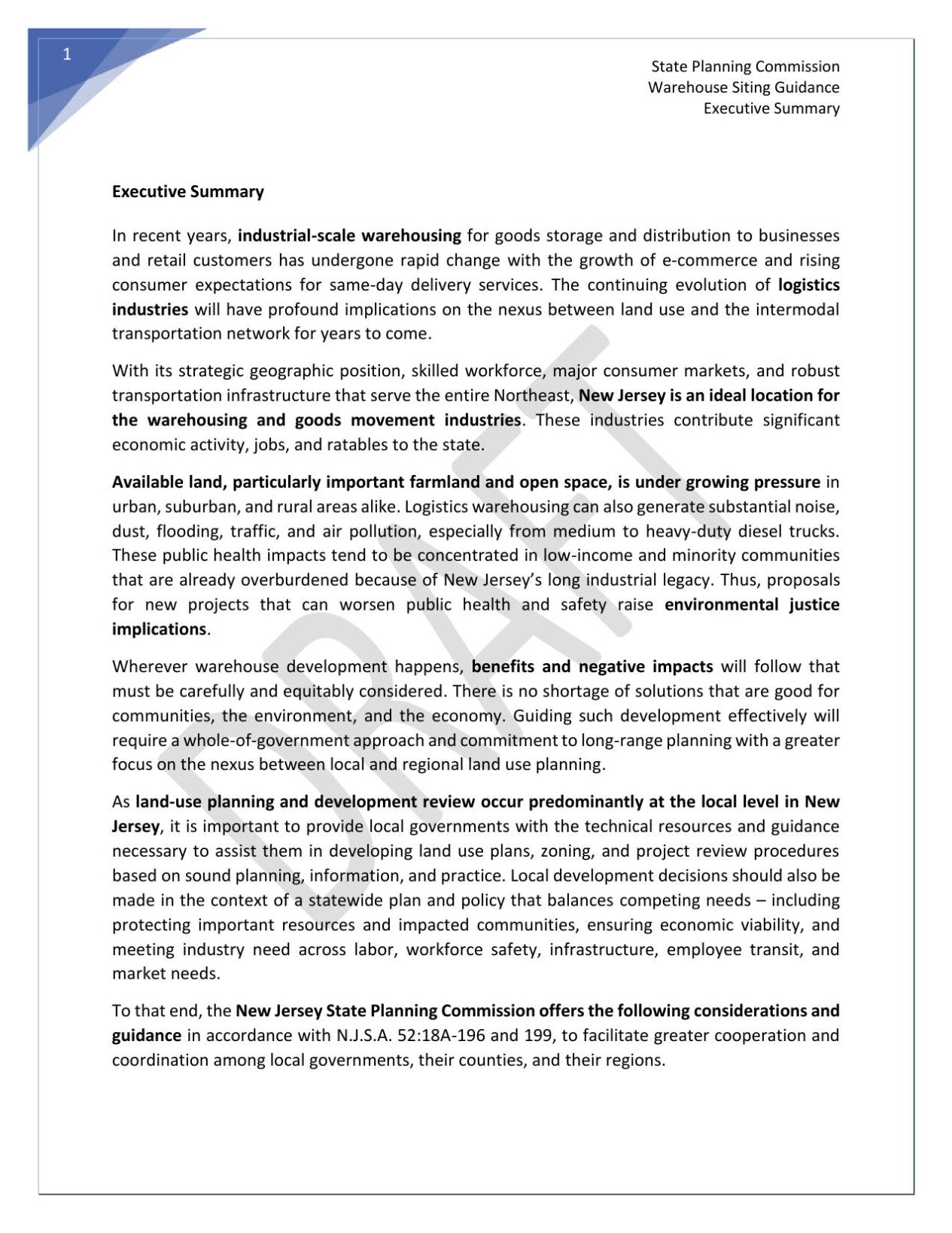
"Available land, particularly important farmland and open space, is under growing pressure in urban, suburban, and rural areas alike," according to the report. "Logistics warehousing can also generate substantial noise, dust, flooding, traffic, and air pollution, especially from medium- to heavy-duty diesel trucks."
And the impact on traffic volume can be huge, the report indicates.
"Changes to existing traffic patterns, especially truck traffic, are a major concern for most residents and municipal reviewing boards," according to the 37-page report.
"Many towns in New Jersey are finding that their communities are particularly vulnerable to poorly sited and scaled warehousing projects because they zoned large areas of their community, particularly farmland in rural areas, for broadly applied 'light industrial' uses," the report says. "It has never been more important that municipalities update and refine their planning and zoning regulations to differentiate among warehouse use types."
Just as municipal regulations should not lump warehouses into "light industrial uses," the rules also should differentiate among the different types of warehouses. The impact of distribution centers ("break-bulk" facilities) that typically do not deliver to end-users may be different from fulfillment centers, which pick items from shelves and make them available for delivery to individual customers.
A key component of the municipality's decision should be a detailed traffic forecast, the report says. "Not all roads are the same, and local and county roads are generally not built to handle heavy truck traffic, especially large volumes," it notes.
Besides engaging local residents, a municipality also has an obligation to let neighboring communities know of applications to build warehouses because the impacts can cross borders, the report says.
"When a municipality receives either a concept plan or preliminary and/or major site plan meeting certain established criteria, representatives from adjacent or nearby municipalities, affected counties, and relevant state agencies should be noticed and invited to provide comments through the duration of the application approval process," according to the report.
Some of the "municipal mitigation best practices," directly quoting from the report, include:
- "Siting largescale warehouse facilities as close as possible to rail, national highway networks, and major arterial roads, which are designed (along wide lanes, gentle curves, long forward sightlines, and infrequent access points) to move large volumes of traffic at high speeds that accommodates vehicles and volumes of all sizes.
- Siting largescale warehouse facilities so that their property lines are between 500 and 1,000 feet from the property lines of the nearest sensitive receptors, (e.g., homes, schools, daycare centers, places of worship, hospitals, community centers, and parks).
- Creating physical, structural, and/or vegetative buffers that adequately prevent or substantially reduce noise and pollutant dispersal between warehouses and any areas where sensitive receptors are likely to be present.
- Providing adequate areas for on-site parking, on-site queuing, and truck check-in that prevent trucks and other vehicles from parking or idling on public streets.
- Locating warehouse dock doors and other onsite areas with significant truck traffic and noise away from sensitive receptors.
- Screening dock doors and onsite areas with significant truck traffic with physical, structural, and/or vegetative barriers that adequately prevent or substantially reduce noise and other pollutant dispersals from the facility towards sensitive receptors.
- Posting signs clearly showing the designated entry and exit points from the public street for trucks and service vehicles.
- Posting signs indicating that all parking and maintenance of trucks must be conducted within designated on-site areas and not within the surrounding community or public streets.
- Ensuring the site plan provides safe truck rest, amenity, and service areas, so drivers do not instead find other offsite areas to park that create sanitary and public health and safety nuisances for drivers, property owners, and the general public."


