


For the last couple of budgets, the Cherry Hill Board of Education has been spending the district's surplus, essentially its savings account, to cover operating expenses and avoid large tax increases.
But the largest district in South Jersey no longer has enough of a surplus to put off higher property taxes and spending reductions, the district's new business administrator, Jason Schimpf, told board members last week at an overview of the proposed 2026-27 budget.
"Cherry Hill has historically, over the last couple years, used substantial amounts of fund balance or surplus to balance the operating budget," he told the board. "That essentially just postponed or paused some of the more difficult structural reductions that would need to occur, and it's kind of pushed them down the line a bit."

On Tuesday evening, the board will take action on the budget at a meeting scheduled for 6:30 p.m. The meeting will be held at the Lewis Administration Building, 45 Ranoldo Terrace, and it also will be livestreamed. The public will have a chance to speak. Details on how to livestream.
The impact will be profound for the coming school year, according to the proposed budget.
"We're talking about $15 million worth of reductions to programs and services we provide and also telling our taxpayers and our parents that we're going to raise their tax bill," Schimpf told the board.
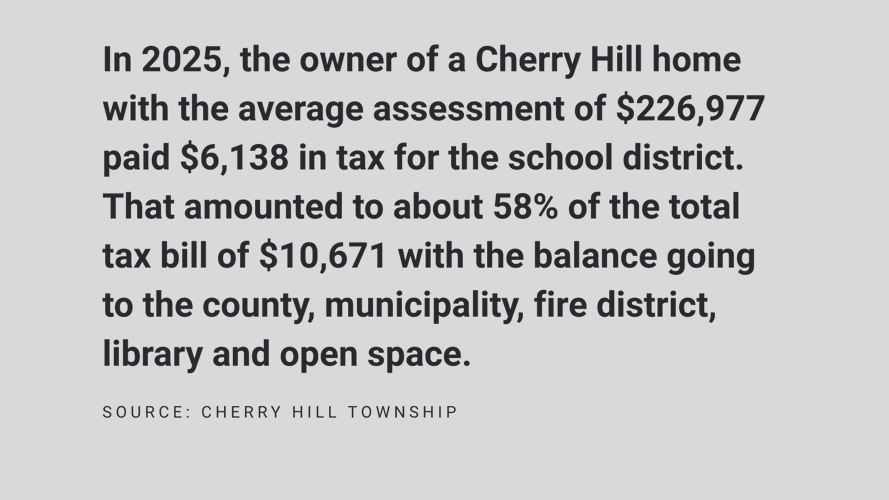
Property taxes would increase 7.4% — about $420 more a year for the homeowner with the average assessment — and staffing costs would need to be cut by $6.5 million. Non-personnel reductions would total $8 million.
"We can't generate enough money at 2% (cap) on the tax levy to cover (just) our contractual salary increases. So, each year, we're basically starting in a deficit basis and having to maneuver and reduce other line items just to meet our salary requirements," Schimpf explained.
The district would be permitted to exceed its 2% limit on property tax increases because the state allows a higher tax boost for extraordinary increases in health care insurance costs for employees.
Costs for health and prescription insurance — both mandated by the state and not subject to contract negotiations — have skyrocketed for Cherry Hill and other districts in New Jersey, Schimpf explained.
After negotiating with the district's insurance carriers, the medical insurance increase was reduced to 19.9%, amounting to a $7 million increase. The prescription drug premium went up 27%, or a $3 million increase.
Schimpf said making the structural changes in the budget will make it "much healthier" financially for budgets in coming years.
Previous 70and73.com coverage: 'Staggering' tax increase of 7.4% plus deep personnel, non-personnel cuts needed to fund Cherry Hill schools.