

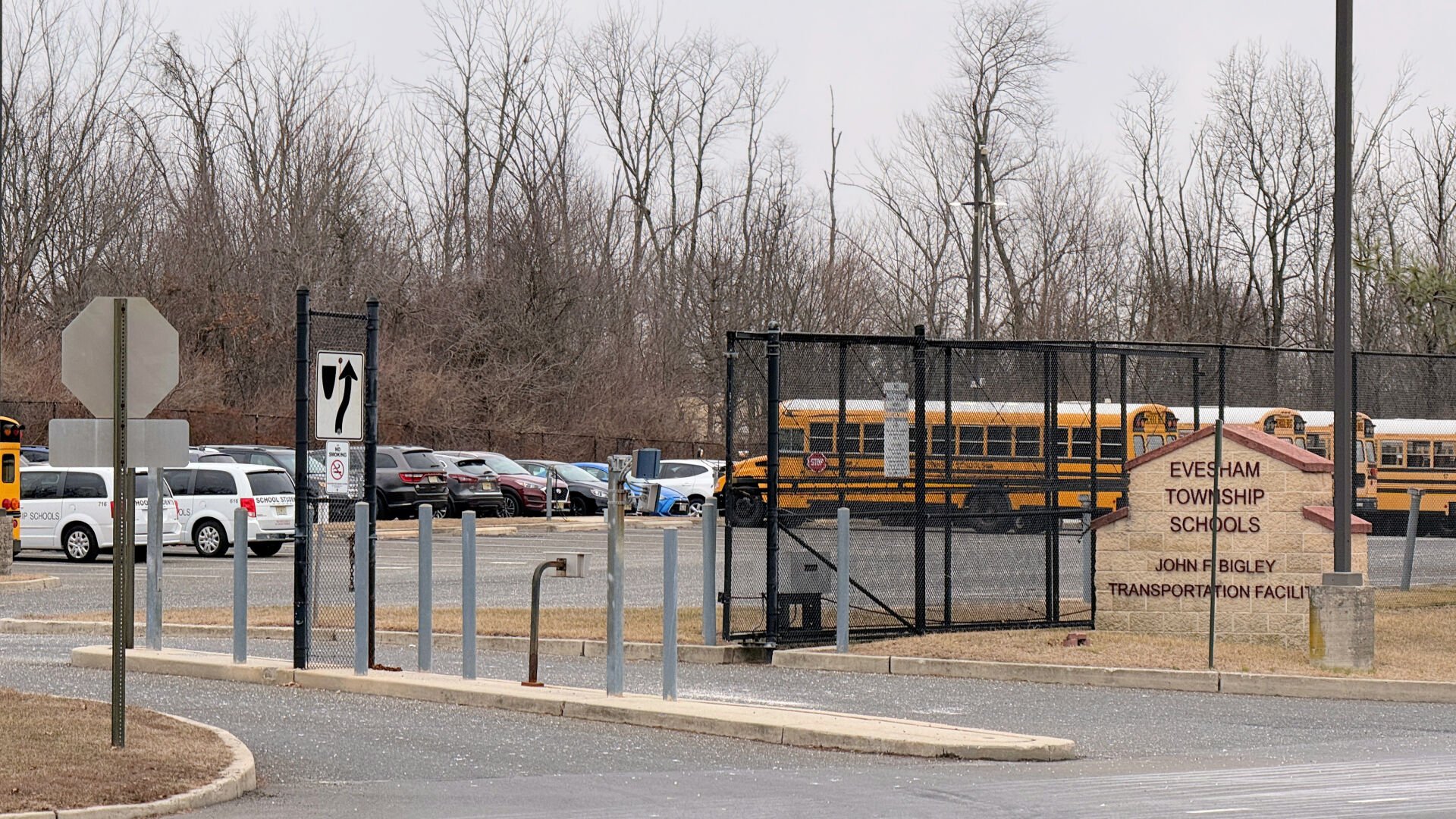
Even if the state approves the Evesham Township School District's adequacy funding application, school bus drivers working for the district would still be outsourced, according to Superintendent Justin Smith.
Homeowners in Evesham face a massive 25.4% increase in their school district property tax bills — $910 a year for the average $272,785 residential assessment — under a plan approved by the Evesham Township Board of Education at a special meeting on Tuesday.
Board members voted 6-3 to apply to a new state program that would allow its budget to reach "adequacy" by sharply increasing property taxes. School districts ordinarily are limited to a 2% cap on tax increases.
The property tax increase is not automatic and needs to get the blessing of the state. If approved by the state, the Evesham district would be able to raise about $14.9 million and restore many of the cuts in the 2025-26 school budget. The budget must be submitted by Monday.
Several board members said taking the one-year increase would put the financially troubled district on a path to adequate budgets in the next few years.
The board voted 6-3 to apply to the state to increase taxes by all of the amount permitted, resulting in a 25.4% tax increase. Some dissenting board members voted to apply for only some of the increase, which amounts to 15.4% and would raise annual taxes by $545.16 for a home with the average assessment.
Voting in favor of the full 25.4% increase were: Jarod Brown, Terri Butrymowicz, William Thompson, Kevin Peelman, David Bock and Aneesh Kanthan. The three board members voting to apply for an increase, but the lower 15.4% amount, were Aiden DeMarsey, Tracy Fox and Janis Knoll.
The new state initiative allows districts like Evesham that are deemed to have budgets "below adequacy" to apply to raise the tax levy to the amount that would allow them to reach adequacy, ETSD Superintendent Justin Smith explained at the meeting.
Smith said that $14,922,643, of which the state would provide about $710,000, is needed to bring ETSD up to adequacy, adding some of that funding would:
- Keep elementary and middle school class sizes at their current levels at a cost of $1.7 million
- Keep the student and staff Team Structure initiative at a cost of $900,000
- Keep elementary and middle school late buses at a cost of $500,000
- Keep bus aides at a cost of $350,000
- Keep elementary school extracurriculars at a cost of $250,000
- Keep health benefits for additional paraprofessionals at a cost of $162,500
- Provide one math intervention teacher to each elementary school at a cost of $480,000
- Provide two 10-month assistant principals at a cost of $280,000
- Provide two middle school arts positions at a cost of $160,000
- Provide a case manager at a cost of $120,000
- Postpone plans to increase the number of walk-to-school routes at a cost of $100,000
- Allocate $7,620,143 to capital reserves and $500,000 to maintenance reserves
"How can anyone stand here in front of this opportunity and say that we are going to take less than adequate, less than average for our kids?" Smith asked. "The state is not going to save our district. The state is giving us this chance to save ourselves."
When asked for his perspective, Jonathan Yates, the ETSD business administrator, said: "I could certainly speak as a dad and say that I think these things are needed for the children in school. One thing that sticks out to me from a business administrator perspective is restoring fund balance (and) strengthening our long-term fiscal health."
Even with the potential influx of funding, the decision earlier this year to outsource the bus drivers employed by the district remains unchanged due to what Smith called budgetary savings and operational challenges spurred by two-thirds of the district's bus routes already being outsourced.
"With everything that is going on in this country right now on a federal level, economically, in good conscience, I cannot ask taxpayers to burden what the state should be providing at that much of an increase," said board member Fox, who voted to take only some of the tax increase.
But board member Peelman, who voted to take the full increase, said the plan would bring stability to the annual school budgeting process.
"We are doing everything in our power to take as much local control of our own destiny as we can, so that we can stop having a continual conversation year after year after year of trying to find out whose jobs are being saved, who has to go home at the end of the workday every day and worry that they are not going to be employed next year," Peelman said.


