
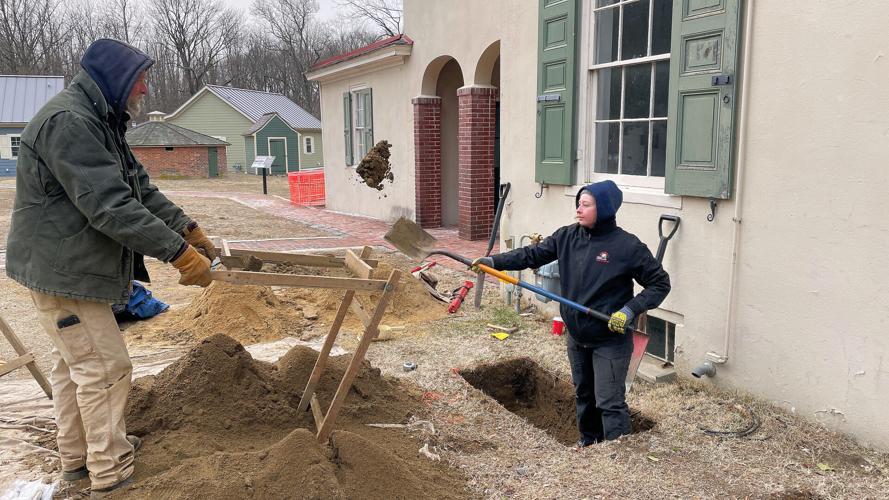

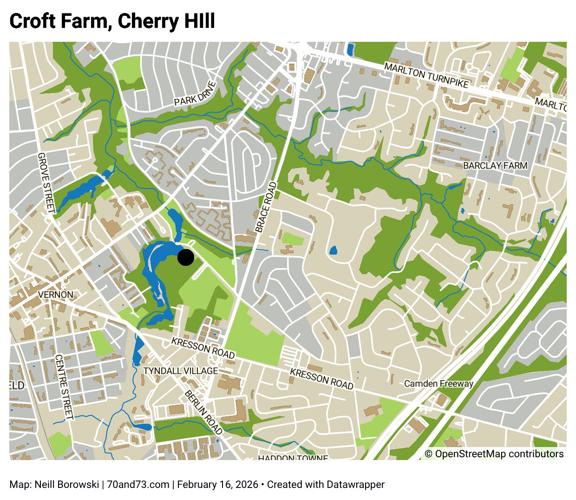

Chelsea Carriere, an archaeologist with the PS&S engineering and architecture firm, tosses soil from the Croft Farm dig to a sifter held by fellow archaeologist Kristian Eshelman.
Archaeologists working on a dig at Cherry Hill's historic Croft Farm have unearthed evidence that the property was a highly active Underground Railroad site helping runaway slaves on their path to freedom in the North.
Historical descriptions of the preserved 300-year-old property owned by Quaker abolitionists before the Civil War mention that the farmstead was a stop on the Underground Railroad.
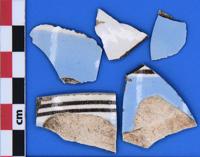
Now the archaeologists contracted by the Township to investigate the soil around the farmhouse before drainage improvements begin say they are finding extensive examples of low-value cuts of meat and inexpensive crockery that would not be part of the household routine of an affluent farm family like the Evans, who lived there.
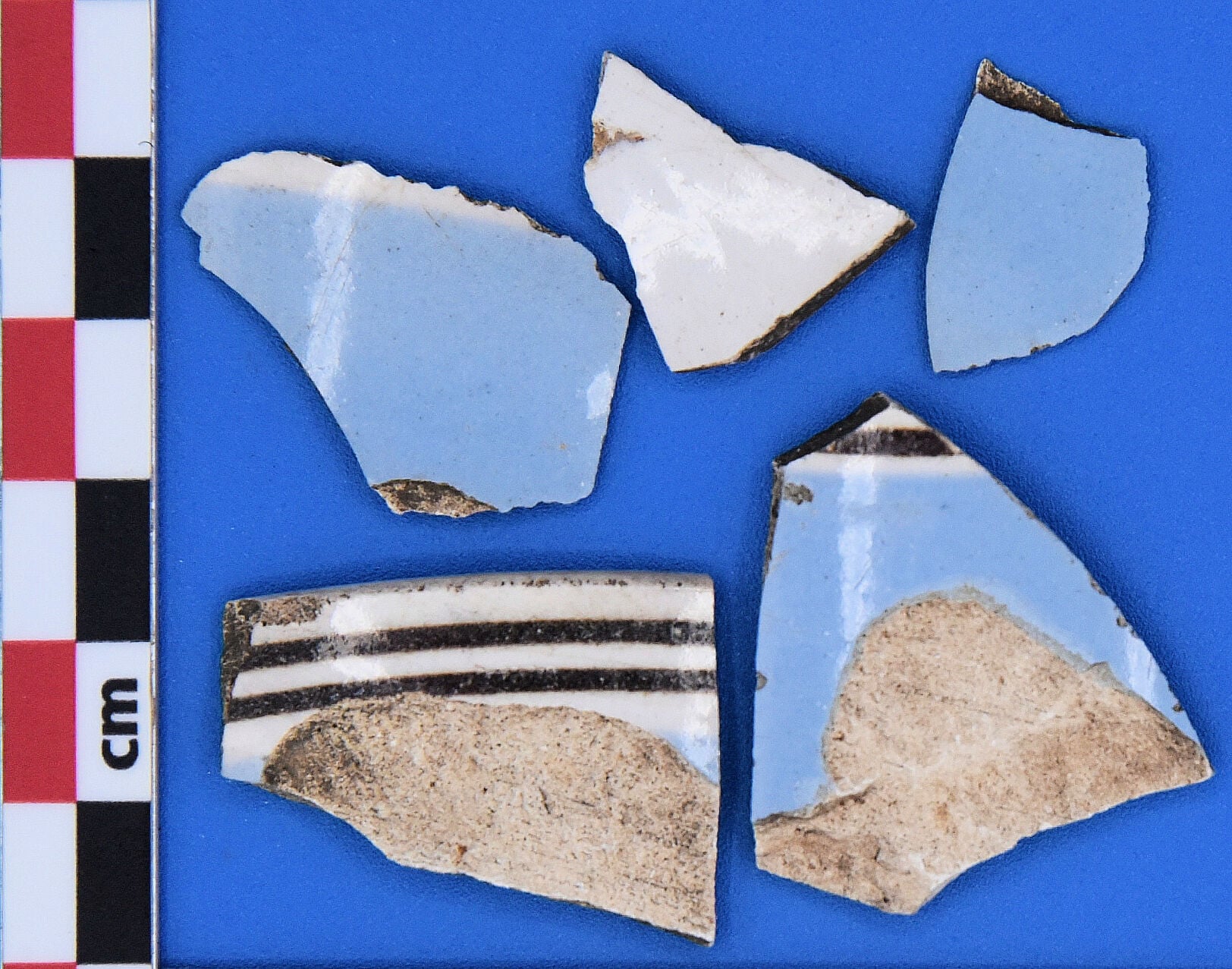
Broken crockery found in the dig at Croft Farm.
The volume of the meat bones and indications of home butchering saw and knife marks — part of what archaeology calls the faunal record — suggests that they were not for the Evans family or household workers but for possibly many people who were regularly moved through the property, explained Chelsea Carriere, known as "The Bone Lady" and an archaeologist with PS&S, a Warren, New Jersey, engineering and architectural firm under contract with the Township.
Carriere, who studied forensic anthropology, dug up a trove of meat bones at the site on Cherry Hill's west side near Haddonfield. The amount preserved underground is "unusual for New Jersey," she said.
Matthew Tomaso, senior director of PS&S' cultural resources department, told 70and73.com that "hands down" the Croft Farm site is "one of the most interesting projects that we've done over the last five years."
The public is invited to watch archaeologists conducting live excavations at the 100 Bortons Mill Road property next Saturday, February 21, and Sunday, February 22, from 10 a.m. to 4 p.m. Discussion sessions with the scientists will be held Saturday at 11 a.m. and Sunday at 2 p.m.
"There's no better way to say it — this is just cool," Cherry Hill Mayor David Fleisher told 70and73.com in an interview.
Fleisher said that PS&S' findings connect the Township to the region's African-American history.
"I think it adds another layer of opportunities to both explore and educate the community," Fleisher said. "It tells a great story of our community's transition from milling and farming to modern-day life."
Trash and garbage in our history was not carted away as it today, especially at farms. Refuse was buried in the backyard or elsewhere on farmsteads. Today those home dumps can offer deep insight into how people once lived.
"Archaeologists are basically garbage inspectors, we analyze trash," Tomaso explained. "The backyard is the most consistent location for any 19th century and earlier sites."
Megan Brown, the mayor's deputy chief of staff, said that because the property is protected as a historic landmark the Township needs to have professionals conduct a dig in the area where the ground will be disturbed. After the dig, drainage improvements will be installed in the ground around the farmhouse.
Brown said the Township received grant funding from the New Jersey Historic Trust for $638,286 to help finance the dig.
When studios were built on the farm site other artifacts also were found, she said. She said the town is discussing ways to have additional public events to share what has been discovered.
Tomaso said the artifacts relating to the Underground Railroad are especially important because detailed records were not kept for many of the stops. The Underground Railroad was not publicized when it was guiding slaves and many families hid their involvement even after the slaves were freed after the Civil War, he said.

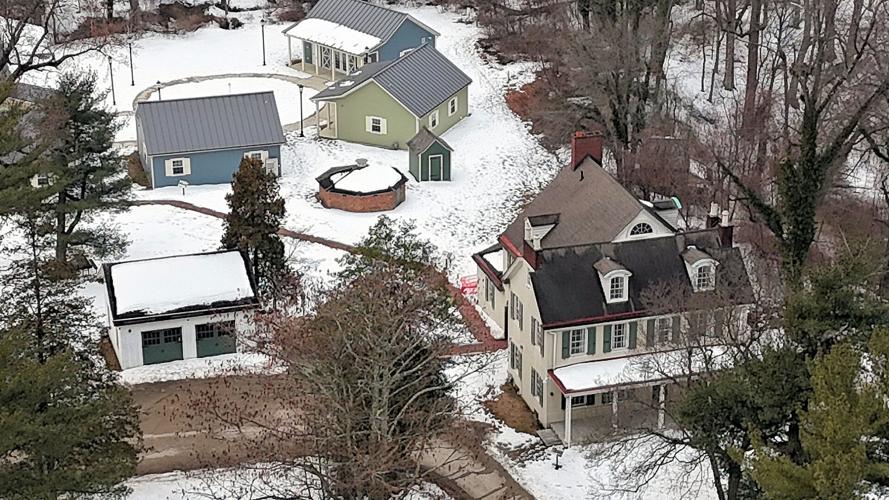
A drone view of the Croft Farm house, right, and outbuildings.
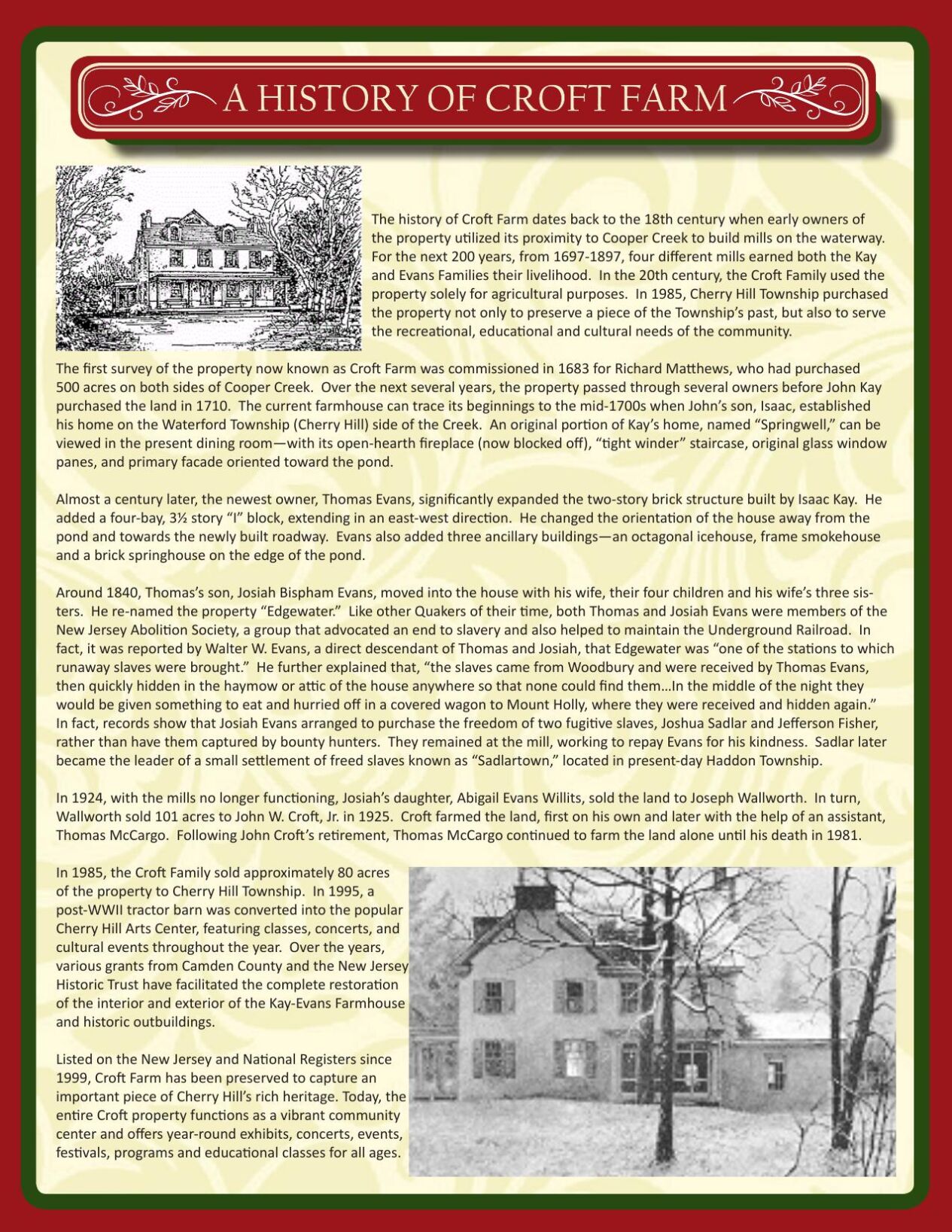
Thomas Evans and his son, Josiah Bispham Evans, were Quaker abolitionists fervently against slavery. Josiah moved into the farmhouse with his family in the 1840s and purchased the freedom of two fugitive slaves, Joshua Sadlar and Jefferson Fisher, according to a Township history of the farm.
Sadlar is believed to have played a key role in the Underground Railroad station, becoming the leader of "Sadlartown," a settlement of freed slaves in what is today Haddon Township, according to the history.
Tomaso said he was surprised that more common artifacts, such as nails, glass from windows, brick fragments and ceramic pipes, generally were not found in the latest dig around the farmhouse.
He suspects more evidence of life centuries ago on the property is buried elsewhere on the land.


