
Rebecca Bennett, fresh from winning the 7th Congressional District Democratic primary, stood before her supporters and took a jab at a shadowy political action committee that had paid for ads in an effort to defeat her.
"I want to congratulate the Republican Party for lighting $650,000 on fire over the last two weeks, because you know what? That tells us they know that I am our best shot at flipping the seat in November," Bennett said at her victory party on June 2.
The total spent by that group, Real Change PAC, is $661,000, according to the Federal Election Commission. That is the largest reported independent expenditure by a single organization to oppose a candidate in the New Jersey congressional primaries.
Little is known about the PAC, though it is believed to have ties to Republicans.
This article from NJ Spotlight News was published through the NJ News Commons, a collaborative network of digital news publishers in the state.
In all, independent committees reported spending $5 million on the New Jersey primaries, almost all in two races. One was the toss-up 7th, held by Republican Tom Kean Jr. The other was the 12th, where Adam Hamawy defeated 12 challengers to seek the seat of fellow Democrat Bonnie Watson Coleman, who is retiring.
In the 11th District special primary in February, such groups spent even more: $6 million. One of them, a political committee funded in part by the American Israel Public Affairs Committee, or AIPAC, spent $2.3 million to defeat Democrat Tom Malinowski.
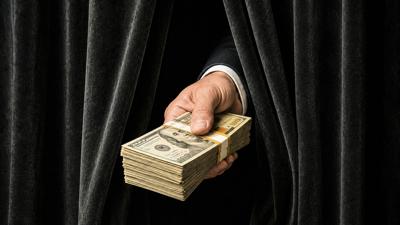
Such groups, which hold enormous sway in U.S. elections, can shield information about affiliations and fundraising because they are organized under the U.S. tax code as social-welfare organizations rather than political entities. In the 2024 federal election cycle alone, dark money spending totaled at least $1.9 billion, according to the Brennan Center for Justice, the New York City-based nonpartisan research and lobbying institute.
Amid criticism by good-government advocates and even some political candidates, independent money in elections has flourished particularly since the U.S. Supreme Court's 2010 landmark Citizens United ruling that declared political spending is free speech. It would take a constitutional amendment, a Supreme Court reversal or federal legislation to reduce the influence of PACs and dark-money groups.
"We have seen candidates talking about the need to overturn Citizens United as a shorthand for talking about campaign finance reform, but it's generally part of a suite of pro-democracy reforms that have a lot of support on the left, but not much on the right," said Dan Cassino, a professor of government and politics at Fairleigh Dickinson University.
"There's no good reason why conservatives should be against campaign finance reform, since there's plenty of money coming in from the left and the right, but the fact that it's put forward by progressives has led to a reflexive opposition," Cassino said.
Most PACs in New Jersey races do name their contributors. The pro-Democrat VoteVets, for example, with 25,000 donors, spent more than $1 million supporting Bennett, a health care executive and former Navy helicopter pilot who campaigned on clean energy, union jobs and foreign trade policy.
These groups have mixed success.
In the special 11th District primary, Malinowski lost to Analilia Mejia by about 1,200 votes. The race was heavy on negative advertising by the AIPAC-funded United Democracy Project, with Malinowski targeted for his support of conditions on defense aid to Israel. AIPAC lobbies for close Israel-U.S. military and economic ties.
Malinowski's defeat, though, led to the election of a more progressive candidate likely to be even less to AIPAC's taste: Mejia has expressed that Israel committed genocide in Gaza.
Hamawy, who called Israel's actions in Gaza genocide, benefited from $1.9 million in outside spending. More than three-quarters of it came from American Priorities, a pro-Palestinian super PAC that backed progressives like Hamawy in several states.
In all, independent groups spent about $2.8 million on that 12th District race.
Sue Altman, a progressive activist who ran unsuccessfully in the 12th District, was supported by $394,000 in independent money. Spending $279,000 against Altman — who supports limits on weapons for Israel — were Citizens Against AIPAC Corruption and the Florence Avenue Initiative.
The anti-AIPAC group reported no contributions of more than $5,000 from individuals. Florence Avenue Initiative, a Texas-based conservative dark-money group, targeted Mikie Sherrill's primary for governor last year with ads accusing her of insufficient support for Israel.
Such spending can help guide voters.
"So, in a Democratic primary, the fact that someone is getting money from an AIPAC-backed group is going to be a problem for some voters, just like getting support from the NRA could be a positive signal for a Republican candidate," said Cassino, referring to the National Rifle Association. "This is kind of what the Supreme Court has been saying for years: Let the money flow, and as long as voters know where it's coming from, it's fine."
That's not always the case, though. Florence Avenue Initiative, as a 501 (c)(4), does not have to disclose its donors. The timing of Real Change PAC's registration means its spending details are not publicly available until post-election.
What is known about the committee publicly is that its treasurer is Nathan Letourneau, its address is a Staples mailbox in Fremont, Nebraska, and its funds are with Bryant Bank in Tuscaloosa, Alabama. It spent about $1.3 million in New Jersey's 7th and Maine's 2nd District, according to basic spending reports filed prior to Election Day.
Real Change PAC ran a YouTube ad, with more than 1.5 million hits, that criticized Bennett for not stating whether she would abolish Immigration and Customs Enforcement. It also sent text messages and a mailer.
Bennett's campaign had sent a cease-and-desist letter to the PAC and called for it to disclose its donors before the election. It did not.
Bennett won by 25 points, leading her to criticize the PAC's efforts.
"We've already seen a little bit of what MAGA is going to do with this race, with the dark money, misleading attacks and flat out lies," she said at her Election Day party. "To Tom Kean Jr., Donald Trump and the MAGA Republicans: We are ready for this fight. Bring it on."


