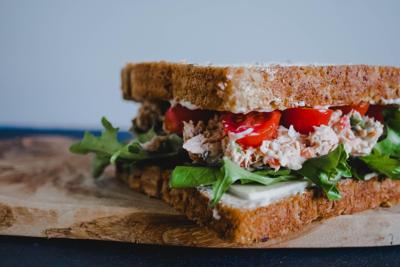
A decision by South Jersey’s largest school district two years ago to serve only tuna sandwiches to students whose family lunch accounts were deep in arrears unleashed a storm of criticism on social media.
Now the Cherry Hill Board of Education is close to a new policy that would permit the same student to select a meal from the menu rather than suffer the attention – and, to some, the taste – generated by the tuna sandwich alternate lunch.
The board Tuesday night discussed how to change its policy and allow students in arrears to select regular menu items, said Barbara Wilson, public information officer for Cherry Hill schools. Since schools opened, Cherry Hill has let students choose from the menu rather than forcing a tuna sandwich on them as the school board works out a new plan, Wilson explained.
Social media posters on Facebook in April were merciless in attacking Cherry Hill for what some consider “lunch shaming.”
One resident on Facebook wrote: ” I’m outraged! But here’s a secret….go to the school board! Light a fire under their ass and the superintendent. Between them and the food service is where these decisions lie. No tuna!!!!!! I pray this is resolved. “
But Cherry Hill, with 10,794 students last year and the 12th largest district in New Jersey, has not been alone in dealing with the thorny issue of balancing student nutrition and self-esteem with fiscal responsibility.
“Every few months, a news story will highlight a child denied a lunch in the cafeteria — sometimes forced to throw the meal away or given a cheese sandwich instead of the planned lunch menu items — because the child does not have money to pay. Other districts will stamp a child’s hand ‘I owe lunch money,”’ according to an article on the Food Research & Action Center website. FRAC is a Washington, DC advocacy nonprofit working to fight poverty-related hunger.
Federal regulations and New Jersey law in the last few years have required school districts to better control student school lunch accounts that are overdue. The methods of getting parents to pay up are what has gotten some districts in trouble.
Tough issue for school districts everywhere
“It’s a national issue,” said Crystal Fitzsimons, director of school programs for FRAC. Some districts’ cafeteria workers throw away a student’s meal if the account is in arrears, she said. “I can’t imagine a more damaging message to a child.”
Best practices at some districts include discreet ways to get the child an alternate meal, Fitzsimons said. “There are ways to do that that are not embarrassing,” she added.
In Cherry Hill’s case in 2017, “they chose a sandwich that no kids in the district like,” Fitzsimons said.
Tuna sandwiches are on the school lunch menu, Wilson of the district said. However, in the last school year 125 tuna lunches were selected on average each day and 60 of them — or nearly half — were alternate lunches given to students in arrears, she said.
Last year, more than a half million school lunches were served in the Cherry Hill public schools, according to district data. Operating revenue from school lunches totaled about $2 million, with reimbursements from the state and federal governments funding about two-thirds of that cost. The other third comes from the sales to students, with no local taxpayer funding of the program, according to the district. Meals at the elementary and middle schools cost $3 and $3.10 in the high schools.
In 2017-18, Cherry Hill ended up with about $25,000 in delinquent accounts. The district forgave that debt and every student started the school year with nothing owed, Wilson said.
By the end of the 2018-19 school year, delinquent accounts totaled $18,000 with about $14,000 from larger accounts (more than $10 owed).
District Superintendent Joseph N. Meloche in August wrote to Gov. Phil Murphy imploring him to change the state law that says school breakfast or school lunch should not be served to students deeply in arrears on their school accounts. “Our school district has not enforced this clause since its inception by the state,” Meloche wrote.
Meloche and Board President Eric Goodwin in August also wrote to the Cherry Hill community about the issue. “Unfortunately, what has been lost in many of the discussions, on Facebook and in the press, is the complexity of this issue and the legal requirements of New Jersey State Statute 18A:33-21,” they said.
Wilson said the district, with 20% of all students eligible for free or reduced price meals, will reach out to families in this group to make sure they understand they can sign up for the program.
Eligibility for free or reduced price meals is based on family income with, for example, a family of four with income of $47,638 eligible for reduced prices and income of $33,475 eligible for free meals, according to federal guidelines.
Wilson said those who need help buying lunches might go beyond those whose incomes fall within the federal guidelines. Sudden hardships, such as the loss of a job in the household, might affect the student’s ability to pay for lunch. Cherry Hill will work with those families, she said.
District officials also have been surprised by families with the means to pay flatly refusing to settle their bills. Wilson said in some cases the students might have purchased a la carte foods and parents said the purchase was not authorized by them.
Lunch shaming under the legislative microscope
Legislators in many states have stepped up scrutiny to make sure students aren’t shamed for not paying. Many experts say the problem is that of the parents and not of the child.
“There are many reasons why a parent may fall behind on a school lunch payment. It is no reason to punish a child, shame them in front of their peers, or call child protective services,” Assemblywoman Pamela Lampitt (D-Camden/Burlington) said in an email statement to 70and73.
“I plan to tackle this issue at the next meeting of the Assembly Education Committee to ensure that no student is forced to go hungry or be humiliated for an unpaid bill,” Lampitt stated.
The U.S. Senate and House of Representatives also are considering a “No Shame at School Act” that’s endorsed by FRAC.
In Cherry Hill, Wilson said it’s difficult to anticipate what issues will bubble up as controversial in the community. One can never tell what will be picked up by social media, she said.
In April, that tuna sandwich post on the What’s up in Cherry Hill (OFFICIAL) Facebook page sparked 387 comments and 146 emoticons, with the crying face emoji accounting for many of them.
©70and73.com/Ewald Technology LLC, 2019.


