
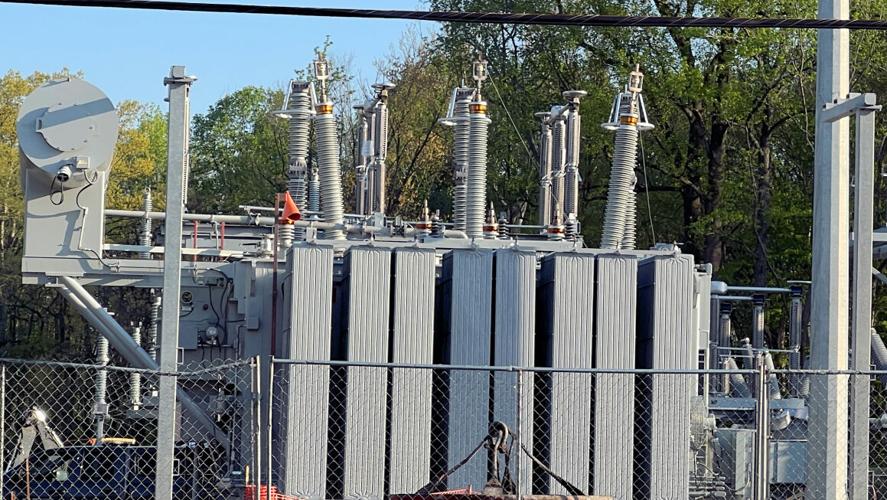


A PSE&G substation in Cherry Hill.
Public Service Electric and Gas Co. is asking the state Board of Public Utilities to approve double-digit rate increases for its residential electricity and natural gas customers.
PSE&G states in its filing that the typical residential customer using 6,580 kilowatt hours a year would pay $125.55 a month, up from $113.64 now and a 10.48% boost. The range of increases cited by PSE&G: a low-use customer consuming 1,644 kilowatt hours annually would face a 16.59% increase and one using 12,000 a year would face a 9.49% increase.
A typical residential heating customer using 1,020 therms of natural gas a year would see a 14.64% increase to $107.73 from $93.97, according to the company's 3,807-page rate filing.
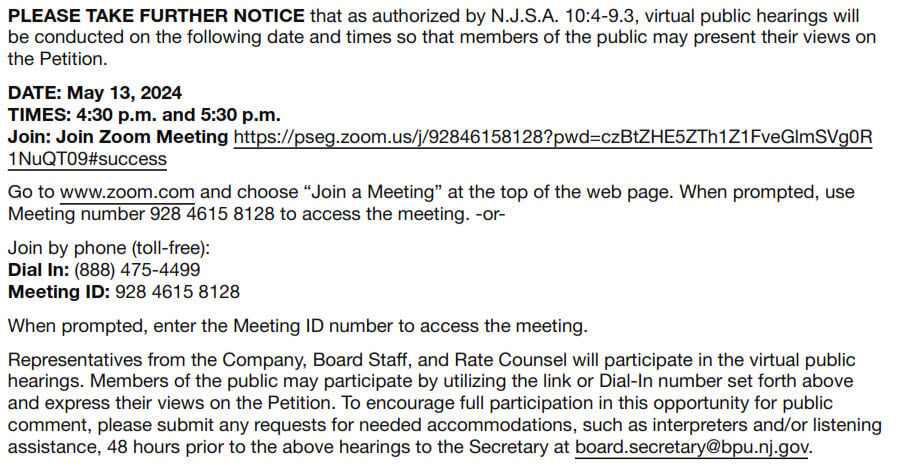
The BPU's process for the proposed rate increase — the company's first comprehensive rate case in nearly six years — will take much of this year, with a virtual public hearing scheduled on Zoom for next Monday, May 13.
Rates being requested cover the utility's distribution of electricity and natural gas and are not related to the sale of electricity or natural gas, which can come from competing providers.
PSE&G, the largest electric utility provider in New Jersey, has about 2.3 million customers from Bergen County in the north to Gloucester County in the south. PSE&G is also the largest gas utility provider in the state, with 1.9 million customers.
If granted, the electric rate increase would add $462 million a year to PSE&G's operating revenue and the natural gas rate increase would add $364 million a year.
In March, the AARP, the nonprofit organization that advocates for people 50 years old and up and has more than 1 million members in New Jersey, filed a motion to intervene in the rate case.
"Older adults are especially vulnerable to high utility prices, in part because they spend a far greater proportion of their income on home energy costs than younger households, most of whom are not on fixed incomes," the AARP said in its motion.
"In 2022, AARP commissioned a survey designed to gather information on the needs, interests and concerns of New Jerseyans aged 50 plus and determined that 28% of New Jersey adults aged 50 plus find their utility bills the most difficult household expense to afford each month," the nonprofit stated.
Others that filed notices to participate in the hearings include New Jersey Large Energy Users Coalition, Atlantic City Electric Co., New Jersey Natural Gas Co., NRG Energy Inc. and affiliates, Walmart Inc., Amtrak and Jersey Central Power & Light Co.
The New Jersey Division of Rate Counsel, an independent state agency that represents consumer interests with utilities, also is a party to the case, according to a statement from Brian Lipman, counsel director.
"Rate Counsel has hired a number of experts on various issues to help with our review," Lipman said in the statement sent to 70and73.com based on questions. "If we are unable to settle the matter, we are currently scheduled to file testimony on July 19. A public version of that testimony, if filed, will be posted."
In its rate proposal, PSE&G maintains that the cost of electricity and natural gas will remain affordable to New Jersey households because incomes in the state have grown substantially since the last rate increase.
"A PSE&G combined electric and gas bill currently comprises less than 3% of New Jersey household income for median-income customers, and less than 2% of household income for low-income customers who take advantage of available payment support programs," the utility stated in its filing. The ratio of utility bills to incomes would remain the same if the higher rates are granted, the utility stated.
PSE&G stated that, since the current base rates were set in 2018, the utility has invested more than $3 billion in capital investments "to strengthen and modernize the state’s electric and gas infrastructure."
Customers also would be able to manage their electricity consumption under a new voluntary time-of-use (TOU) rate proposed by the utility.
Electricity costs would be reduced on the customer side and peak demand and the need for additional generation would be cut on the PSE&G side, the utility stated.
Peak usage for electricity is from 4 to 9 p.m. on weekdays, according to the filing. The lower TOU rates would be charged from midnight to 6 a.m. PSE&G suggested the TOU rates would be particularly attractive for residential customers charging their electric vehicles.
Customers who enroll to try out the TOU program in the first 24 months would be protected from any risk, according to the filing. The company said it would refund the difference if the TOU charge exceeds what the customer would have paid with standard residential rates in the first 12 months of their enrollment.
PSE&G, noting that its customers' payment behavior has changed over the years, asked the BPU to allow it to alter its collection process.
The percentage of customers who pay by check has plunged to 17% from 52% in 2010 and the percentage continues to shrink, according to the rate filing.
Customers paying with a credit card now are assessed a fee at the time of payment. PSE&G said it would assume the cost of credit card transactions and that cost would be reflected in rates.
A related issue, the utility stated, is an increase in its need for working capital adjustments under the new rate plan due to a "significant increase in the collection lag from customers."
"Since 2020 the company’s accounts receivable balance has increased significantly," PSE&G stated. "While the company is working with customers to address their arrears, there remains a significant lag in revenue recoveries, increasing working capital needs."
The utility stated that the working capital requirement is not for uncollected bad debt "but recognition of an ongoing lag in revenue recovery."
PSE&G also told the BPU it needs to recover $109 million in deferred storm costs from storms between 2019 and 2021. The most costly was a total $72-million expense from Tropical Storm Isaias in August 2020.
However, the utility proposed ending the current system of recovering anticipated storm recovery costs through its rates.
A new "Storm Recovery Charge" would be added to customer bills for the actual cost of storm damage rather than having the utility project those costs and including in rates, which can result in the utility inadvertently overcharging when there are no storm events or undercharging and losing money when there are severe storms, according to PSE&G's filing.
The recovery charge would allow the company to charge customers for the storm damage in a "reasonable time" after they were incurred rather than waiting for the next rate case.
PSE&G also stated it wants to recover preparation, or "pre-staging," costs that occur in advance of a forecast major storm event. Pre-staging includes moving employees and equipment around and hiring outside contractors to help with storm recovery before the storm occurs. Customers would pay for pre-staging costs when they exceed $250,000 for any one instance, according to the utility.
The utility is part of publicly traded Public Service Enterprise Group Inc., which is based in Newark. Its stock closed on Monday on the New York Stock Exchange at $71.34 a share, near its 52-week high of $71.41.


