
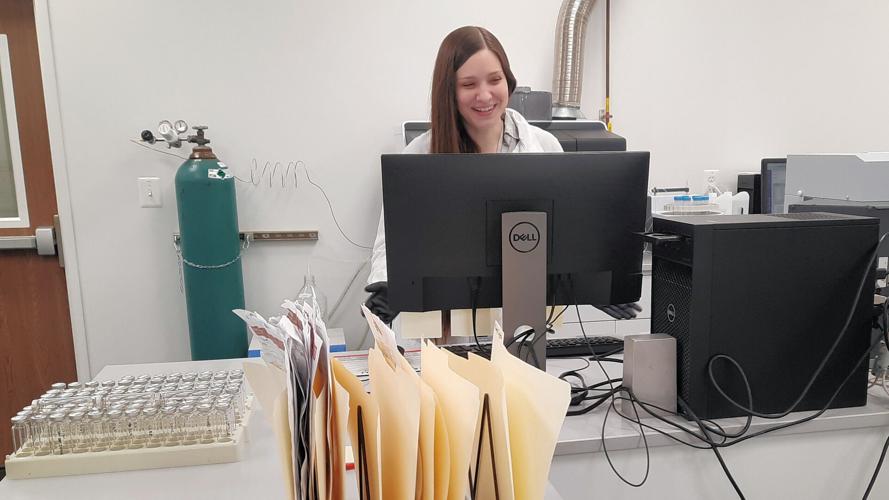


Kristen Goedde, co-founder of Trichome Analytical of Mount Laurel, brings more than a decade of laboratory testing experience to her current position.
When the state of Maine tested medical marijuana samples in a special audit last year, laboratories found that 42% of the samples contained harmful substances.
The 120 samples from caregivers and dispensaries showed that the cannabis samples were mixed with a variety of contaminants, including yeast, mold, pesticides, heavy metals and filth, according to the report from Maine's Office of Cannabis Policy, which found several policy failures in the state's oversight of cannabis inventory.
Maine's findings underscore the critical role cannabis testing labs are playing in New Jersey's exploding recreational cannabis industry, an industry leader told 70and73.com. The legal use of recreational cannabis by users 21 and older was signed into law by Gov. Phil Murphy in February 2021.
The testing facilities "are what really separates us from the black market," said Scott Rudder, president and founder of the New Jersey CannaBusiness Association.
"It is no different than if I buy something off the shelf at a supermarket when I can look at the ingredients and know exactly what those ingredients are and what exactly the percentages are," Rudder said. "That is what you are going to be able to get through a licensed purchase product. And that's why the labs are so valuable."
The categories of cannabis products legally sold in New Jersey and subject to laboratory testing are dried flowers, concentrated oils, vape formulas, topicals, syringes, lozenges, soft chews and shelf-stable food products, according to the New Jersey Cannabis Regulatory Commission.
In Mount Laurel, laboratory Trichome Analytical was the first in the state to receive a cannabis testing license. The company, and the five others in New Jersey that have since received CRC laboratory testing licenses, focus on products sold by licensed recreational marijuana businesses, Christene Carr, a CRC public information officer, told 70and73.com in an email.
For cannabis entrepreneur Kristen Goedde, co-founder and chief operating officer of Trichome Analytical, the rise of the medical marijuana industry after 2019 in New Jersey motivated her to change her professional focus, she told 70and73.com.
Goedde said she began her career as a laboratory analyst at New York-based Eastern Analytical Services, an environmental and industrial hygiene company, after she graduated from the State University of New York-Purchase in 2010 with a bachelor’s degree in psychology.
After about 15 months working at Eastern, Goedde spent the next eight years working for International Asbestos Testing Laboratories in Mount Laurel, where she held analyst, supervisor/senior analyst and laboratory manager positions.
"I was already looking into how I could transition the skills that I already had in third-party testing into the cannabis industry," she said. "I knew that there was a lot of potential and (it was) something that I really wanted to help with. So I ended up talking with one of the owners at (International Asbestos) and we ended up forming Trichome Analytical together."
Goedde, who said she is a cannabis consumer, also noted that she had a personal reason to get involved: her mother used marijuana to help alleviate her ALS-induced pain.
The entrepreneur and her colleagues moved into a suite at 6000 Commerce Parkway in the Greentree North Corporate Center in March 2020. Less than five months later, the company sought and received the necessary approvals from the International Organization for Standardization and the Drug Enforcement Administration. The approvals were needed to "ensure the lab equipment is routinely inspected, calibrated and maintained," she said.
The next step came in April 2021, when Goedde, several colleagues and professional experts testified before the Mount Laurel Township Zoning Board and secured a variance to operate within 1,000 feet of a residential zone or use.
A few residents expressed concerns about the company's request, such as odors that might emanate from the building and the type of chemicals the company uses, according to meeting minutes. In response, company representatives pledged to install filters if needed. They also said the chemicals it uses are liquid nitrogen, gaseous helium and argon, are inert and not hazardous.
Trichome's application for a state cannabis license was approved in November 2021.
"I (was) proud that the first adult-use license has been issued to a New Jersey-based small business and honored to represent other small businesses seeking to get established in this industry in their home state," Goedde said.
Since Trichome received NJ CRC license TL-000001, Smithers CTS, also in Mount Laurel, has been awarded a cannabis testing license, as have sites in Camden, Mercer and Morris counties, according to the NJ CRC website.

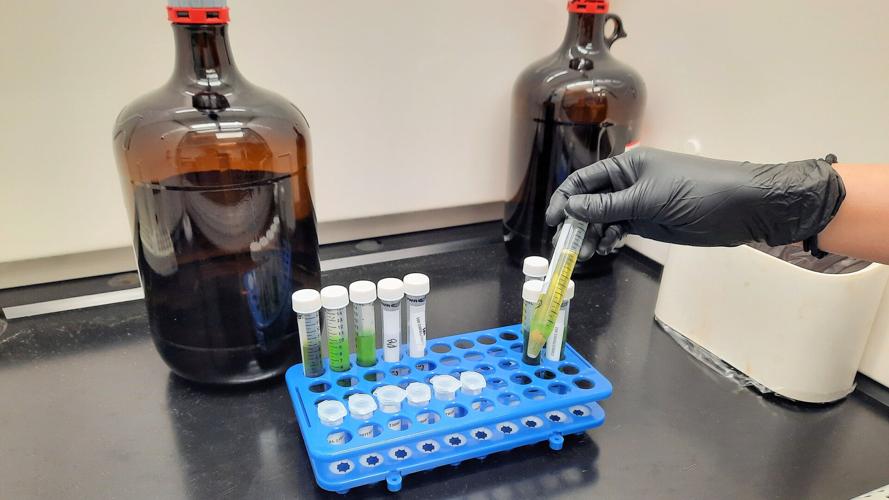
Cannabis samples are prepared to determine the amount and type of compounds they may contain.
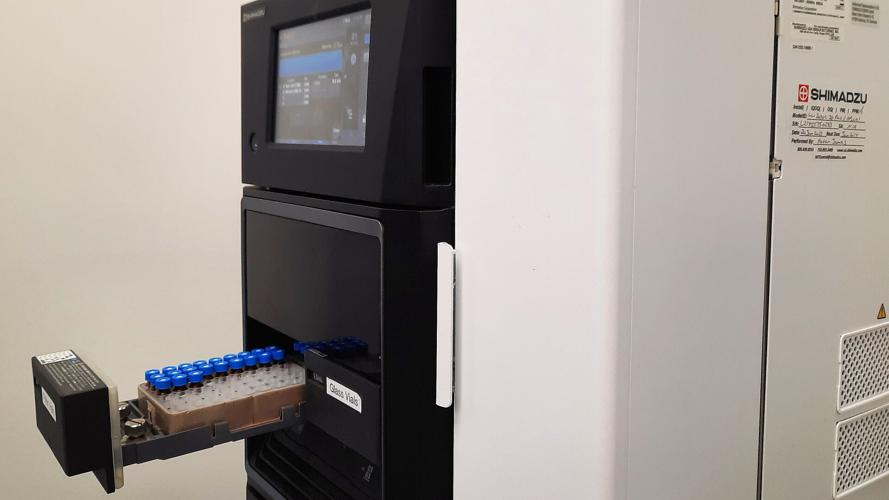
When testing cannabis samples, Trichome uses liquid and gas chromatography to separate and identify compounds, according to the company. The maximum amount of each contaminant allowed in the cannabis is specified by state regulations.
"All the samples we get, we process through all of our analysis (and) then we hold on to them for 30 to 45 days," Goedde said. "Then, we dispose of everything by mixing it with soil and having a waste-compliant company come and take it."
Goedde declined to say how many times Trichome has had to reject a cannabis sample for excessive contaminants. She did say that "cannabis can become contaminated through unintentional means."
"The most common failure point...is for microbial contamination such as mold, as many types of microbes are present in the environment, especially outdoors and in humid environments," she said.
Goedde said although she welcomes the thoroughness of the tests the NJ CRC requires for cannabis testing laboratories, the cannabis testing business in New Jersey has not been as brisk as she first expected.
New Jersey initially adopted the Maryland state regulations, which require testing of 10 pounds of flower per batch, Goedde said. "To help motivate the current operators into testing and to bridge that gap, (NJ CRC) decided to increase that limit to 100 pounds. So (business is) about 10 times less than we expected."
Industry spokesman Rudder agreed with Goedde about the reason cannabis testing in New Jersey has not neared its peak.
"There are a lot of cultivation facilities that need to be stood up and a lot of manufacturing facilities need to be stood up," he said. "But once they get their funding for their operations, once they plant their first seeds and they go through the entire process of that cycle, then you are going to see a lot more business being generated by all these various cultivation facilities and these manufacturing facilities because they are the ones that will utilize the labs the most."
Rudder predicted that business for cannabis testing laboratories will increase beginning this year.
However, Peter Goldman, a representative from Integrated Analytical Solutions, an existing testing laboratory in Hamilton Township, Mercer County, suggested to that municipality's Planning Board at a meeting last year that more cannabis testing labs may be needed sooner than Rudder’s prediction.
"The number of (cannabis) cultivators, manufacturers and retailers has skyrocketed (in New Jersey), but the number of testing labs in the state has not," Goldman testified as part of the company's request for approval to begin cannabis testing at its location.
New Jersey lawmakers first allowed recreational marijuana use in the New Jersey in 2021, so it is hard to know if the state has enough cannabis testing labs to meet the need, Jeff Brown, NJ CRC’s executive director, told 70and73.com in an email.
"The commission will periodically assess the number of facilities to ensure they meet the state's market needs," Brown added.

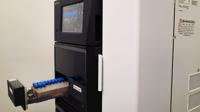
This chromatography machine helps determine the potency of the THC in a cannabis sample.