
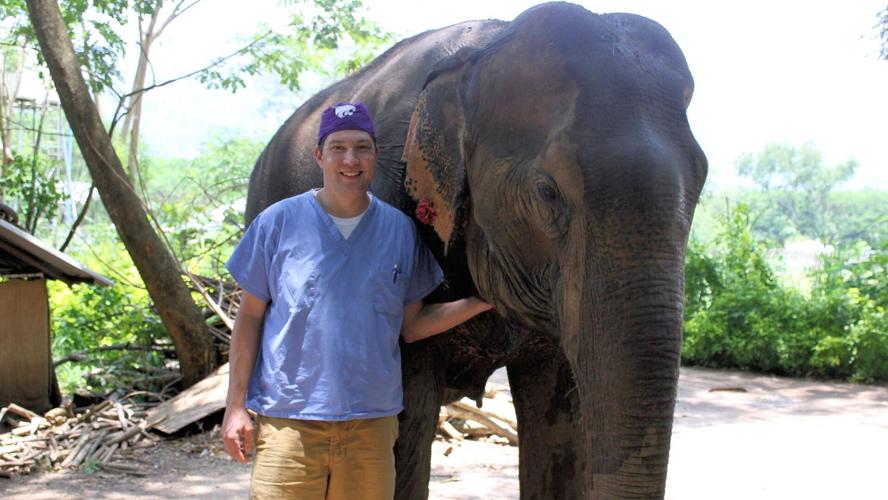

Dr. Matthew Edson with an elephant on a visit to Thailand, where visited as part of a student group doing an overseas surgical project.
When Dr. Matthew Edson graduated from Rutgers University, he left his family's farm in Eastampton in Burlington County and traveled to Manhattan, Kansas, to earn his veterinary degree from Kansas State University.
Edson had no in-state choice: New Jersey did not have a vet school. Only 33 schools across the nation grant the four-year Doctor of Veterinary Medicine degree.
Today, Edson spends full-time as founding dean of New Jersey's first veterinary school at Rowan University and occasionally looks in on Rancocas Veterinary Associates, the practice he owns in Mount Laurel.
Edson is working with Rowan to start a New Jersey veterinary school from scratch.
"We want people who are not going to be just good doctors, but good humans," Edson told 70and73.com in an interview about setting up a new school in both structure and philosophy. He said the school will teach medical skills, but a key ingredient for the successful veterinarian will be people skills and the ability to work with animal owners.
"It's not all puppies and kittens," Edson said.
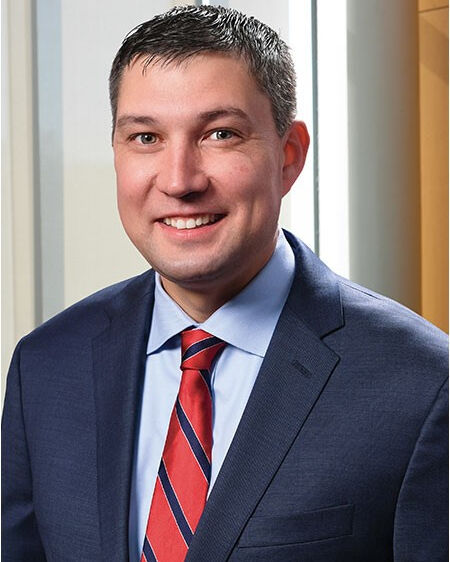
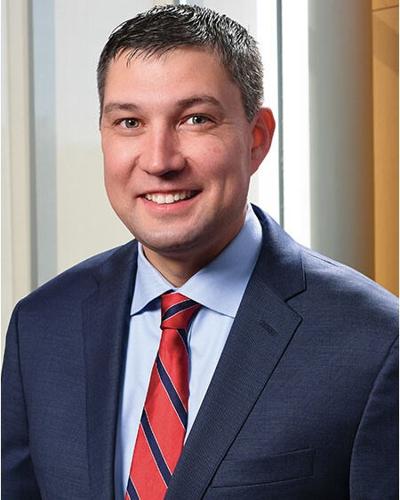
Dr. Matthew Edson
After gaining its accreditation from the American Veterinary Medical Association Council on Education, the Rowan University School of Veterinary Medicine expects its first class of 60 students to start in fall 2025, later reaching a goal of 90 students in each year's class.
The construction of the veterinary school facilities was made possible by a $75 million allocation last November from the state to build the classrooms, laboratories and small-animal hospital on Rowan's West campus in Glassboro. Plans are being developed to build a large-animal hospital at the Dream Park equestrian complex in Logan Township, Gloucester County, Edson said.
A New Jersey veterinary school addresses both a sharp increase in applicants nationally while providing a state school with much lower tuition than New Jersey residents now have to pay elsewhere.
"That's why I'm here doing this," he said of providing New Jersey residents with a less-expensive route to the DVM degree.
The average first-year tuition and fees this year for students who are not residents of the states in which they study totaled $53,316, according to the American Association of Veterinary Medical Colleges. This year, the average amount owed by DVM graduates with debt — about six out of 10 have some debt — was $178,541, the association reported.
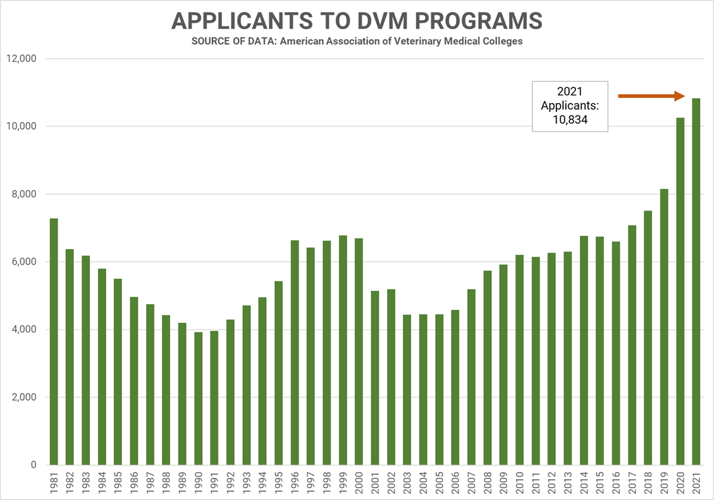
In 2021, a total of 10,834 students applied for admittance to the nation's 33 schools — a 64% increase from five years before and 76% increase from 2011, the association reported. In 2021, there were 2.4 applicants for every seat for incoming DVM students, the association reported.
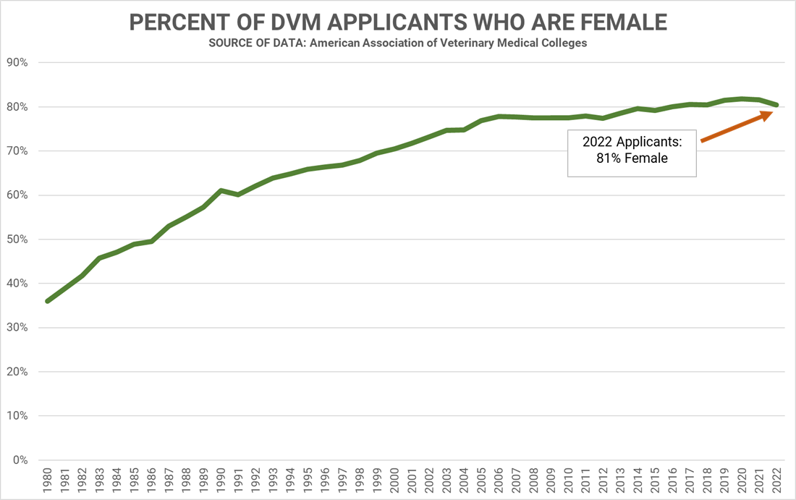
A major shift in veterinary students began in the mid-1980s, when half of all DVM students were male and half female.
The proportion of men entering the field has fallen steadily over the last 40 years. In 1980, 64% of vet students were men and 36% women. Last year, 81% were women.
Just as the demographics of applicants has changed, the business of being a veterinarian has evolved.
"Many of these practices became much more busy during COVID," Edson said. Families added pets during the pandemic and also worked at home, where they spent more time than usual observing their pet's health.
Edson said the stress and burnout already felt by veterinarians grew worse as business surged.
Other sources of stress include the changing business model of a typical practice, where drugs have been a profit center and sold on site. Now online pet drug companies have taken away a large part of that business, Edson explained.
The cost of treating a sick pet or animal also adds to a vet's stress levels, he said.
Better diagnostic and treatment tools have become available for animals, but they come at a cost. Edson said that when a vet meets with a pet owner and suggests treatment, three levels of costs can come up: the gold standard (most costly), the in-between and the minimal.
Knowing that a dog, cat or other pet could be made healthier or saved, but also knowing what the owner can afford, compounds the stress level, he said. An owner might be used to paying a $50 deductible for treatment of a family member, and then face a bill for several thousand dollars in the vet's office for the pet.
Pet insurance helps and it has grown significantly in the U.S., he added.
Recruiting veterinarians has become more and more difficult. Many older vets are retiring and others want to leave the stress behind and do medical research at pharmaceutical companies, Edson explained.
Edson, 38, said being an animal doctor is on his mind all of the time. For example, he said he finds it difficult to drive by a field and see a horse lying down — wondering if it is ill and in need of help.
He spent his early years in Mount Holly before his family moved to the farm in Eastamption. Edson has since purchased the farm next door where he lives with his wife, Jenna Edson, a social worker whom he met at a Burlington County Farm Fair on 4H Game Day. The couple is expecting their first child in September.
When Edson graduated with his DVM, he started practicing as an on-the-road equine doctor, driving within a 50-mile radius of Eastampton to treat his patients. Within two years, he had an office in the basement of his farmhouse and later opened his Mount Laurel practice.
He did not need to think long when asked about his favorite patients. "I really like goats. They're a cool patient," Edson said.
One boom in his practice: Treating miniature pigs. Edson said many vets do not like miniature pigs, which include the pot-bellied variety. The pigs can become unruly in the office and often there is lots of screaming.
"Pig handling can be trying," said Edson, who estimated he has 600 miniature pig patients in his practice, with some owners driving four hours to make a visit.
Vet students must study all animals, from parakeets to dairy cattle. Some DVM grads do not enter traditional practice, but work with marine animals or on fish farms. Others might specialize only in food animals, such as commercial swine.
Edson turns to his hobby to take his mind off his work. Although he is not a hunter, the graduate of Rancocas Valley Regional High School makes duck decoys.
Carving decoys allows a kind of "surgery" where mistakes can be made, he said.


