
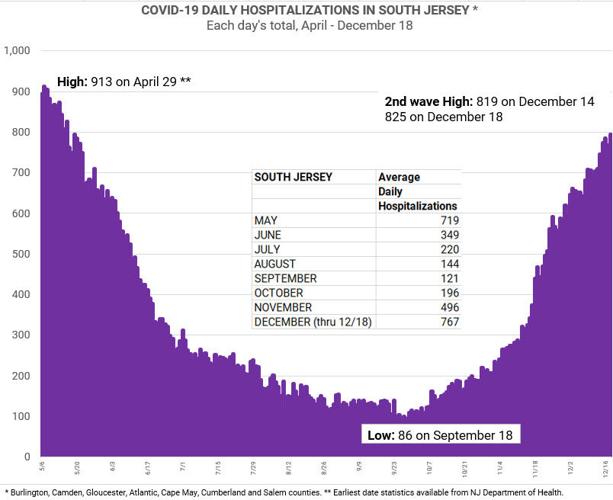

Although South Jersey's hospital beds again are filling with COVID-19 patients, the medical community is in a far different place today than it was last spring during the first wave of the pandemic.
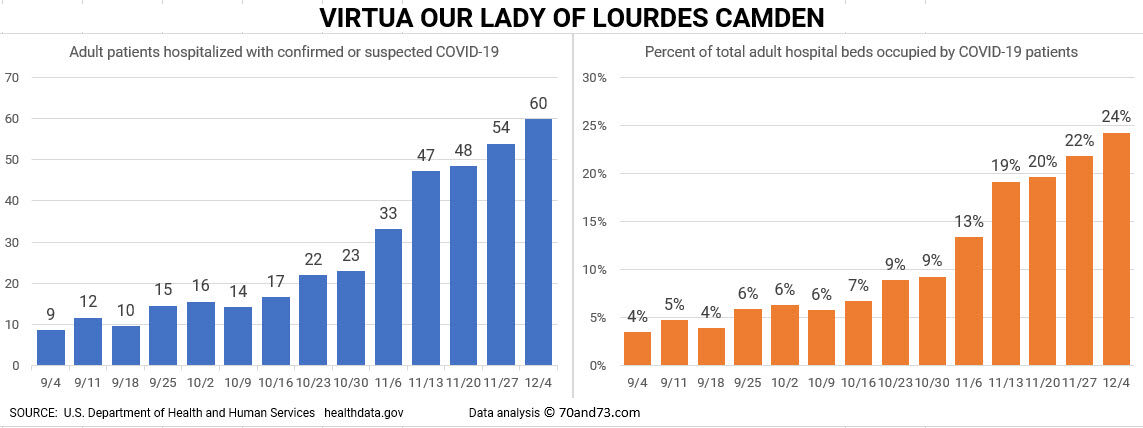
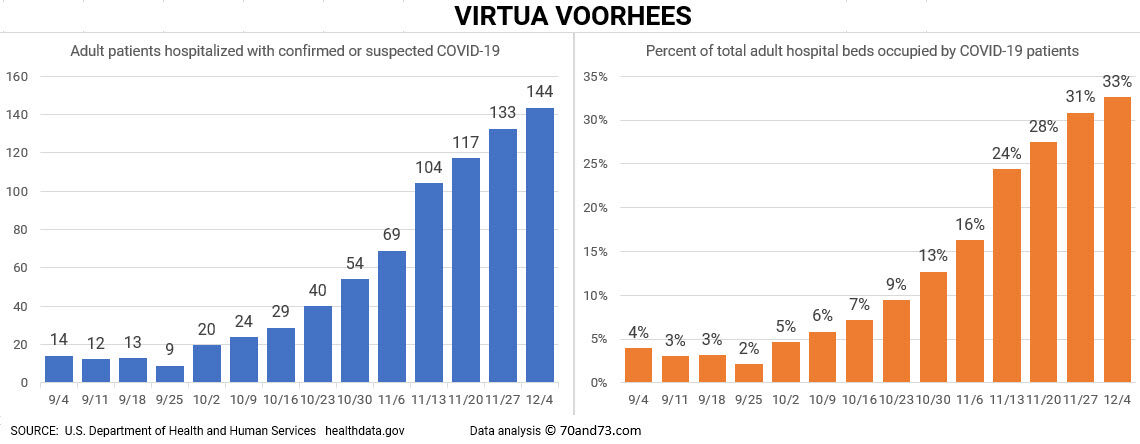
Newly disclosed statistics from the U.S. Department of Health and Human Services show sharp increases in coronavirus patients at hospitals in the 70and73 area since early September.
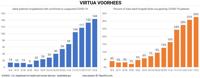
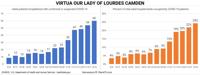
Virtua Voorhees reported 144 confirmed or suspected COVID-19 adult patients in the week ended December 4, the latest available. That total is up 10 times over the 14 cases reported in early September. COVID-19 patients filled about 4% of the total adult beds in the Voorhees hospital in early September. By the first week in December, the coronavirus patients filled one-third of all beds.
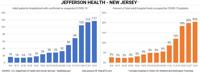
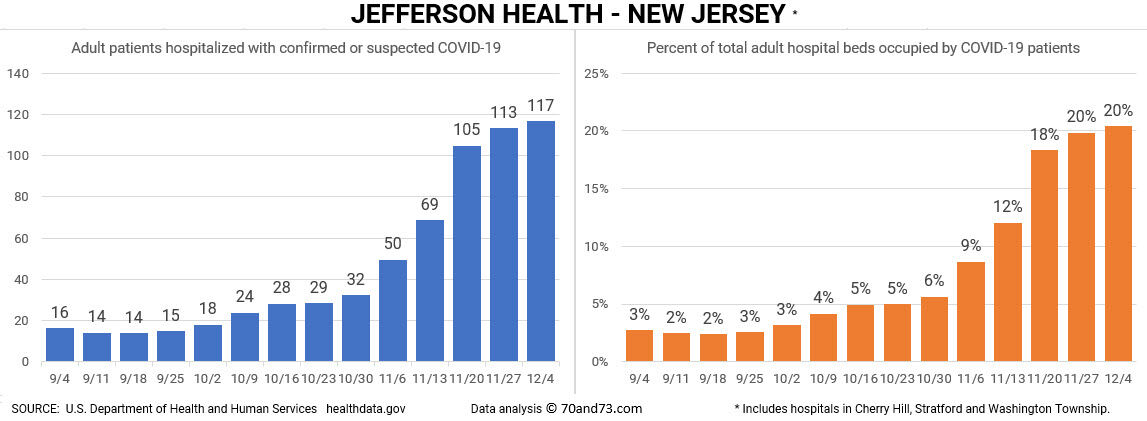
Jefferson Health New Jersey — comprising hospitals in Cherry Hill, Stratford and Washington Township — saw the number of coronavirus patients grow to 117 from 16 between September and December. Twenty percent of the system's beds were filled with pandemic patients, up from 3% in early September.
Statistics on hospitals in the 70and73 area appear at the end of this article.
While the most-recent numbers of pandemic patients tax the South Jersey hospitals, they haven't produced the chaos and uncertainty of March and April. Hospitals, led by the state, early in the pandemic scrambled to add ventilators, personal protection equipment and extra bed capacity. In early April, the state was on a ventilator shopping spree and also flew in 100 borrowed ventilators from California.
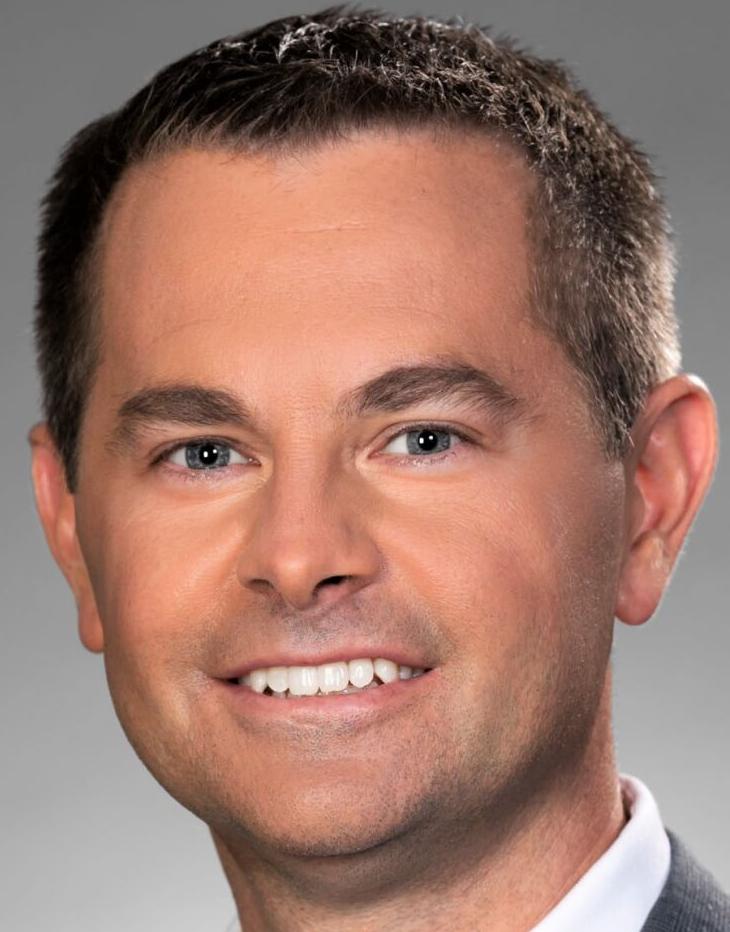
Brian E. Sweeney, president and chief operating officer of Jefferson Health - New Jersey.
"We have a lot more experience in managing COVID from a treatment perspective," Brian E. Sweeney, president and chief operating officer of Jefferson Health-New Jersey, told 70and73.com in a telephone interview on Friday.
Sweeney said that, in the first wave, one of the greatest concerns was a potential shortage of ventilators, which provide a mechanical assist to a patient's breathing. Worries were so serious that state officials during the first wave discussed a potential triage list of who would be on ventilators if patients outnumbered the machines.
"What we've learned since then, is that many patients don't require ventilators," Sweeney explained. Patients can recuperate simply by having their bodies positioned and using oxygen, he said.
The hospital executive said that, yes, many more COVID-19 patients have shown up in emergency rooms in November and December, "but many of them can go safely home" after treatment is prescribed. In the first wave, everyone was being admitted to the hospital because there was so much unknown about treating the virus.
Sweeney said he's heartened by the collaboration among South Jersey hospitals — in essence, competitors in normal times — in the face of figuring out how to treat patients. Because of professionals working together everywhere, the treatment and model of care has "really evolved pretty aggressively," said Sweeney, who formerly was chief operating officer of Jefferson University Hospital in Center City Philadelphia.
"I've never seen in my career people come together like this to develop clinical pathways and clinical algorithms," he said. The executive, a nurse by training who earned his MBA to move up in hospital administration, said he hopes the spirit of cooperation continues in the post-COVID world.
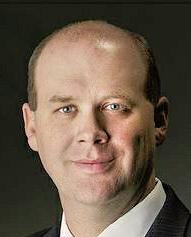
Dr. John Matsinger, executive vice president and chief operating officer of Virtua Health.
Dr. John Matsinger, executive vice president and chief operating officer of Virtua Health, agreed with Sweeney's appraisal. It's a "dramatically different situation," the physician said.
"I think we've just learned a lot about the disease," Matsinger told 70and73.com in a telephone interview on Friday. Convalescent plasma, from people who have had the disease, now is being used to treat patients after its use was approved by the U.S. Food and Drug Administration. The FDA also approved the use of monoclonal antibodies in treatment.
"We are nowhere near the situation we were in the spring with the use of ventilators," Matsinger said.
Matsinger said he's optimistic about this week's rollout of the Pfizer Inc. COVID-19 vaccine. Front-line healthcare workers were getting the first shots, beginning Tuesday, in New Jersey. On Friday, the FDA gave approval to a second vaccine, developed by Moderna Inc. Distribution began Saturday.
"We need people, just for a little longer, to continue what they're doing," he said of transmission precautions, such as masking and social distancing. Matsinger said he understands the holidays and New Year's will be far different this year. "We're really asking people to not gather. And we know that's hard."
Caution has been the key at Virtua. "We're assuming everybody has COVID when they hit our doors," he said. Everyone who gets admitted for anything is getting tested. Elective surgery patients also are tested. He said the only patient who isn't tested, for example, might be someone who shows up at the emergency room with an injured arm, and is treated and sent home. However, that person will be screened and given a mask.
Matsinger said his front-line staff is resilient, but they do get fatigued and, sometimes, a bit frustrated. "These people are putting themselves in the line of fire every day," he said, and it's demoralizing when people say they don't want to wear a mask.
When the first pandemic wave struck in the spring, hospitals pretty much shut down for everything else to focus on the virus. That cannot happen again, Matsinger said, adding "we need to take care of other medical conditions."
He said people were having signs of a heart attack or stroke, for example, and thought they could wait it out because they feared COVID-19 transmission at the hospital. "Don't put off emergencies, because we might not be able to fix the problem," Matsinger advised.
Virtua's system is seeing the normal volume for primary care visits, is nearing the normal amount of surgeries and true emergencies are beginning to come back, he said.
Sweeney at Jefferson said the recent increase in cases likely is due in large part to gatherings around Halloween at the end of October. He said Jefferson's predictive model for COVID-19 cases shows a peak right after the Christmas holiday, which would correlate back to Thanksgiving gatherings.
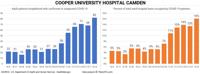
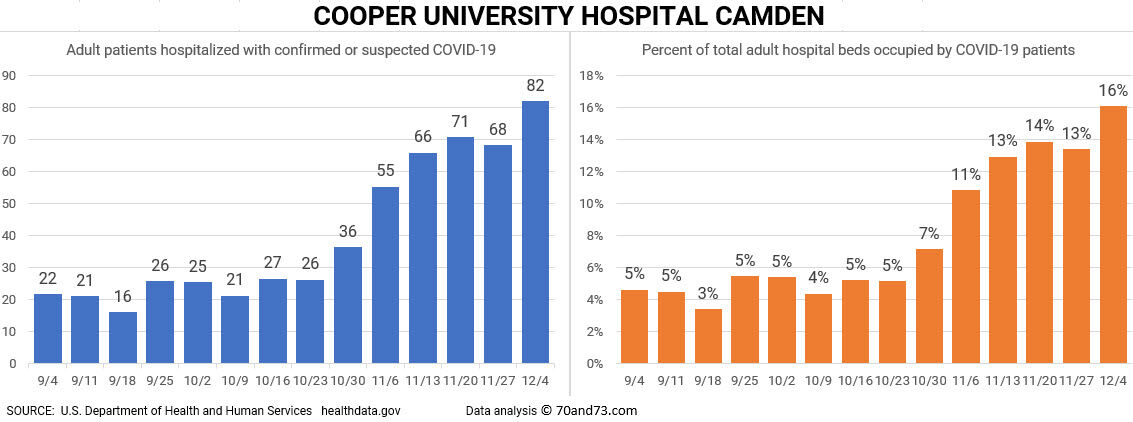
Another large hospital in the 70and73 area, Cooper University Hospital in Camden, has seen the same jump in cases as others in South Jersey. COVID patients in early December reached 82, up from 22 in early September, according to the federal database. About 16% of Cooper's beds were occupied by COVID-19 patients in early December, up from 5% in early September.
70and73.com requested an interview with a Cooper representative on Friday, but Wendy A. Marano, Cooper's public relations manager, said no one was available because the staff was focusing on distributing the COVID-19 vaccine.

DATA SOURCE: New Jersey Department of Health


